The Honest Question
Is MemoHoney a Scam, or Just Oversold?
A scam is a product that is never shipped or that cannot be refunded; overselling is a real product whose marketing outruns its evidence. On the checks a shopper can run from outside, MemoHoney reads as the second thing rather than the first, and here is the case on both sides so you can weigh it yourself.
What genuinely checks out
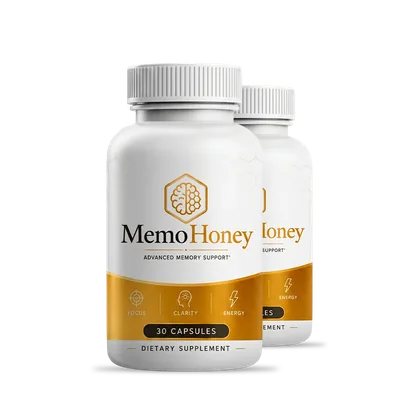
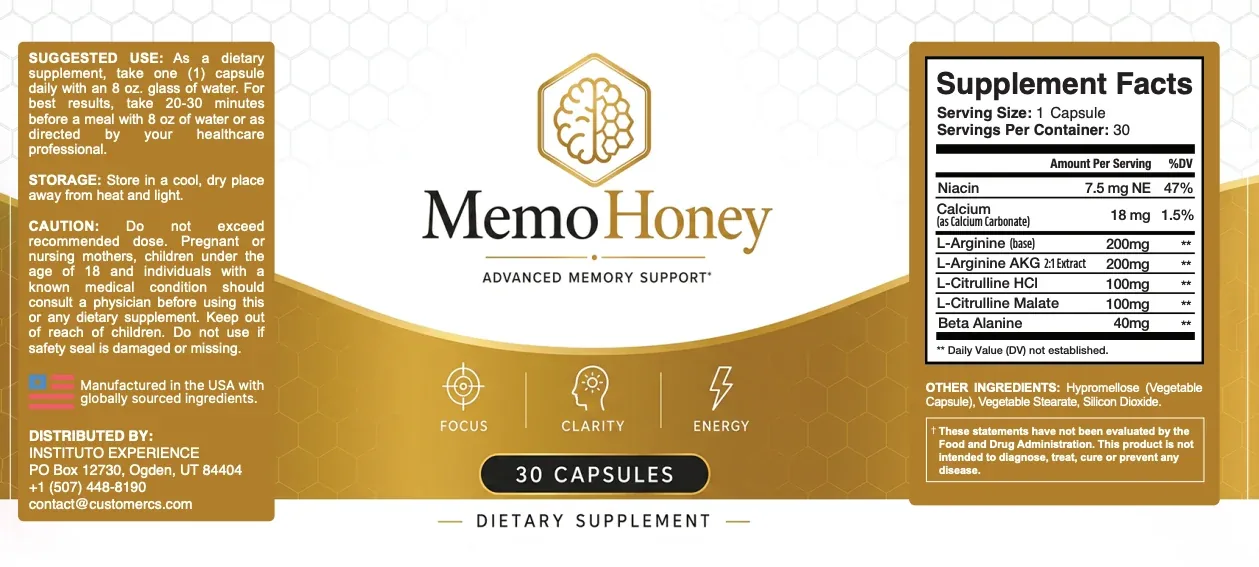
The product has a real, itemised Supplement Facts panel with named ingredients and disclosed milligram amounts rather than a proprietary blend, which is the single most useful thing a supplement label can do. A US distributor, a postal address and a support phone number are printed on that label. The seller states a 60-day money-back guarantee, checkout runs on an established payment processor, and the sales page carries the FDA "not evaluated" statement it is required to carry. None of the listed packages is a subscription or a rebill.
The red flags we would want you to see
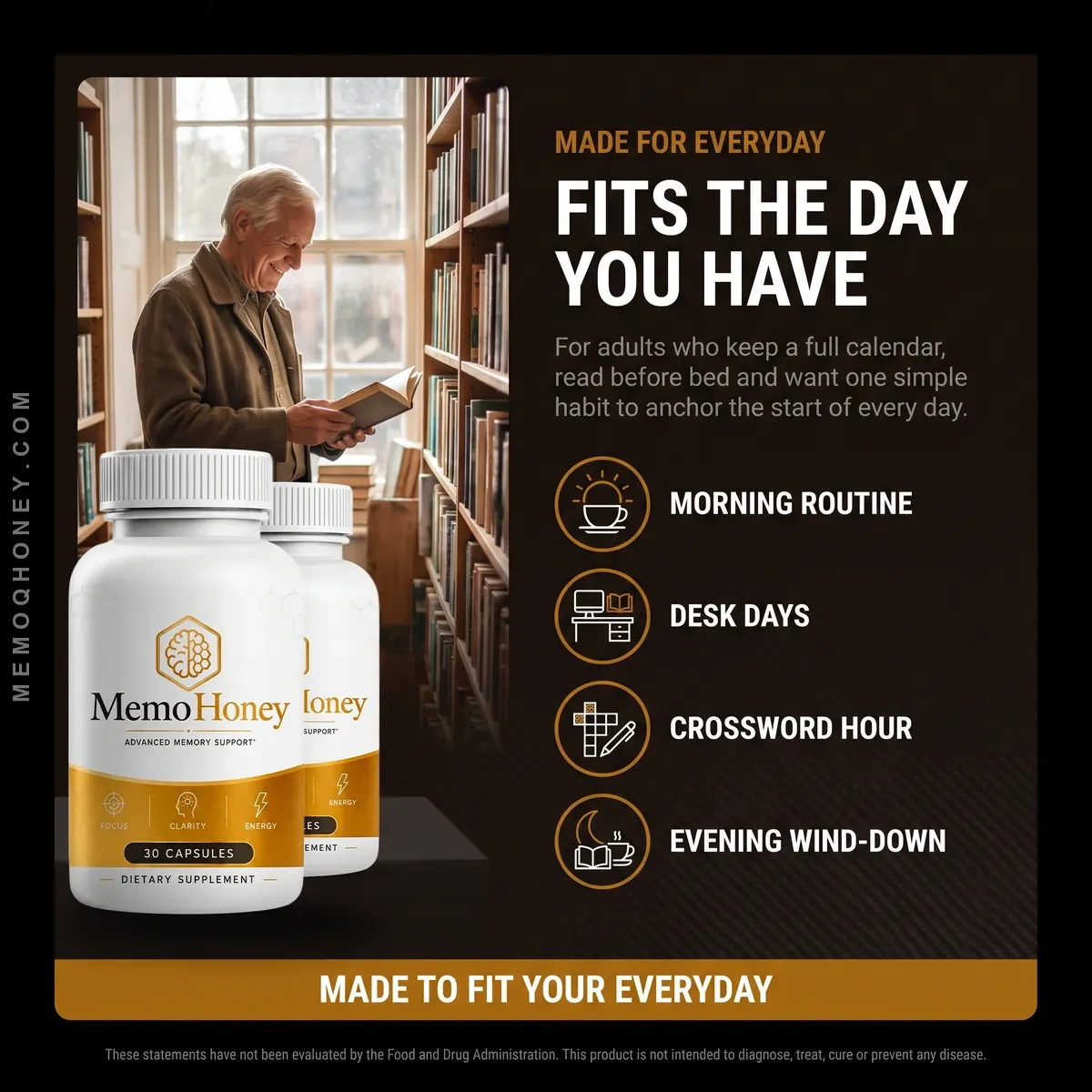
The brand name is the first one. MemoHoney contains no honey; the panel is an amino-acid blend of L-arginine, L-citrulline and beta-alanine with niacin and calcium, so the name evokes an ingredient that is not in the bottle. The second is dose: the citrulline and arginine trials that produced measurable vascular effects used gram-level amounts, and this panel carries 200 mg and 400 mg, while the beta-alanine literature uses roughly a hundred times the 40 mg here. The third is the leap from circulation to recall, which the ingredient literature does not close. Fourth, the urgency framing on the sales page is standard direct-response pressure rather than a real deadline. Fifth, no clinical trial has ever been published on this finished formula, and the testimonials are manufacturer-published and unverified.
What the evidence does not show
Nothing in the published literature shows that this formula improves memory, slows cognitive ageing or treats any condition, because no trial has tested it. The honest ceiling on the claim is that some ingredients on the panel have circulation evidence at much higher doses, and that is a long way short of what the marketing implies. Genuine memory loss or confusion is a matter for a clinician, not a capsule.