MemoHoney Official Website › Choosing A Memory Supplement
Choosing A Memory SupplementChoosing a memory supplement: seven questions, in the order that saves money
Ask for the amount before the ingredient, and half the shelf disappears. Ask what the trial dose was, and most of the rest goes with it. This guide sets out seven questions in the order that eliminates the most products fastest, and ends with the four things that outperform every capsule in the category.
Seven questions, no shortlist, and the second one disqualifies the bottle this desk sells.
Question one: is there an amount beside every ingredient?
The cheapest question, and the one that removes the most bottles.
A Supplement Facts panel with a milligram figure against each active is the minimum for a product to be comparable with anything. Without it you cannot compare two bottles, cannot check a row against its research, and cannot tell a generous formula from a sprinkle.
Two common evasions are worth recognising. A proprietary blend gives one total for several ingredients, so the order tells you the ranking and nothing else. And some labels print no panel at all, which is where the product this website sells sits, as its ingredients page states in its second section.
This question is first because it is the cheapest to ask and it removes the most products.
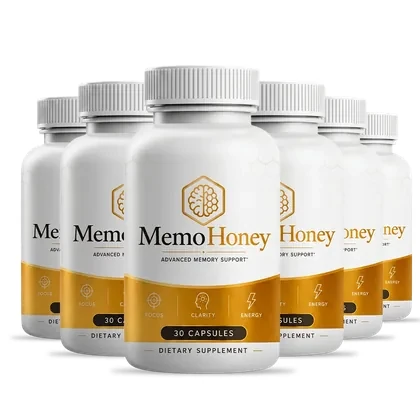
MemoHoney fails question one. Six actives are named and the pack carries no Supplement Facts panel. A guide that placed this question fourth, after the house product had already passed three others, would not be a guide.
Question two: how does each amount compare with its trial dose?
The question that turns question one into information.
This is the question the first one exists to make possible. Find the published trial for the ingredient, find the daily amount it used, and put the two numbers side by side.
The gaps in this category are rarely subtle. Beta-alanine's own sports nutrition position stand describes four to six grams a day for at least four weeks (the sports nutrition position stand). Arginine moved blood pressure at four grams a day and above (the 2022 dose-response meta-analysis). Citrulline needed three grams twice daily (the 2008 pharmacokinetic study). Those are scoop-sized amounts, and a capsule holds well under a gram in total.
A useful rule of thumb: if the trial dose is measured in grams and the product is a single daily capsule, the product cannot be delivering it, whatever the label says or does not say. Vitamins and minerals are the exception, because they work at milligram and microgram scale by definition.
| Compound | Trial dose | Can a single capsule hold it? |
|---|---|---|
| L-arginine | 4 g a day and above | No |
| L-arginine AKG | 12 g a day | No |
| L-citrulline | 3 g twice a day | No |
| Citrulline malate | 8 g a dose | No |
| Beta-alanine | 4–6 g a day | No |
| Niacin | 14–35 mg a day | Yes, comfortably |
| Ginkgo extract | 120–240 mg a day | Yes |
| Vitamin B12 | 2.4 mcg a day | Yes, thousands of times over |
Trial doses from the records in the source list below. The right-hand column is arithmetic about capsule volume, not a judgement about any brand.
Question three: what is the strongest trial in this family, and which way did it go?
One trial per family, and which way it went.
Every ingredient family on this shelf has one trial that is larger and better conducted than the rest. Knowing which one it is, and which way it went, is worth more than reading twenty product pages.
For ginkgo it is the Ginkgo Evaluation of Memory study: over three thousand older adults, a median six years, no reduction in dementia incidence (the Ginkgo Evaluation of Memory trial). For multivitamins it is COSMOS-Mind, which found a modest benefit over three years (the COSMOS-Mind trial). The nitric-oxide family was tested as squarely as anyone has managed: thirteen weeks of nitrate, with cognition and cerebral blood flow both measured, and neither one shifted (the thirteen-week cerebral blood flow trial).
Sellers quote the small positive trials because there are more of them. The large ones are harder to find and they decide the question.
- Search the ingredient name plus "randomized controlled trial" on PubMed rather than on a search engine.
- Prefer a systematic review or a meta-analysis to a single study, and prefer a recent one.
- Check the population. A result in soldiers under operational stress is not a result in a sixty-year-old at a desk.
- Check the endpoint. Resilience, mood and reaction time are not memory.
- Check whether the compound tested is the compound on the label. Salt forms and complexes are frequently not interchangeable.
Question four: what does it cost per researched dose?
Per researched dose, which is the only comparison that works across formats.
Not per bottle and not per day: per the amount somebody actually studied. That one conversion makes most of this shelf comparable for the first time.
It also produces uncomfortable answers. Bulk citrulline powder costs a few cents at the eight-gram dose the trials used. A capsule product containing an undisclosed fraction of that costs a few dollars a day. The gap is paying for convenience, and convenience is a real thing to pay for, but it should be priced knowingly.
The counter-argument is adherence, and it is a good one. A powder that gets weighed out for nine days and then sits in a cupboard delivers nothing at all, while a capsule taken every morning for two months delivers whatever it contains. Anybody who knows they will not weigh powder should buy capsules and stop feeling bad about it.
Question five: what does the label say about who it is not for?
Three things to look for, and what a silent label tells you.
A label that names its own exclusions is a label written by somebody who expected a reader. The useful ones say who should not take it, which interactions matter, and what sensation to expect.
For this shelf specifically, three things are worth finding: whether the product lowers blood pressure, because that interacts with a great many prescriptions; whether it contains niacin, because the added form has an upper intake level of 35 mg and several products carry it at once (the NIH Office of Dietary Supplements niacin fact sheet); and whether it contains beta-alanine, because the resulting skin tingle alarms people who were not told (the 2019 risk assessment).
A label with no caution at all is not a safer product. It is a less careful one.
Question six: what happens if you want your money back?
Four terms, and the one nobody checks decides the other three.
The window, who pays return postage, whether opened bottles count, and whether the window is longer than the supply. That last one is the question nobody asks and it decides whether the guarantee is real.
A thirty-day window on a ninety-day supply means you must decide with two thirds of the product unopened. A sixty-day window on a sixty-day supply means you can finish everything you paid for and still change your mind. Those two offers look identical on a sales page and are not remotely the same.
Also check how a refund is opened. A telephone number answered by somebody who can see the order is faster and more accountable than a form, and a seller with no telephone number is a seller betting you will not persist.
Question seven: is a supplement the right tool at all?
Four things that outperform every capsule on this shelf.
The last question, and for a good many readers it is the only one that matters. Several common, treatable things produce exactly the symptoms this entire shelf is marketed against, and a capsule taken instead of an appointment is the only genuinely harmful outcome in the category (MedlinePlus on memory loss).
Hearing
Untreated hearing loss is the commonest reason a person in their sixties is described by their family as forgetful. They never captured the sentence in the first place. A test is quick and usually free.
Sleep
Memory consolidation happens in slow-wave sleep. Six broken hours produces the exact complaint that sells these products, and snoring with daytime sleepiness is a specific pattern worth mentioning.
Medicines and alcohol
Anticholinergics, some antihistamines, several bladder drugs, long-term acid suppression and alcohol all affect memory or the vitamins behind it. A pharmacist will review the list for nothing.
Thyroid and B12
Two cheap blood tests behind two treatable causes. Both are routine, neither is exotic, and both are missed while people try supplements.
If all four are clear and the complaint is the ordinary friction of a busy life, then a supplement is a reasonable small experiment and the six questions above are how to pick one. If any of the four is unaddressed, it is the larger lever by a wide margin.
The seven questions, together
All seven in one table, and what each one removes.
| # | Question | What it eliminates |
|---|---|---|
| 1 | Is there an amount beside every ingredient? | Proprietary blends and labels with no panel, which is most of the shelf. |
| 2 | How does each amount compare with its trial dose? | Gram-scale ingredients in single capsules. |
| 3 | What did the largest trial in this family find? | Families whose best evidence went the other way. |
| 4 | What does it cost per researched dose? | Products priced as though they delivered a trial dose. |
| 5 | Who does the label say it is not for? | Labels written without a reader in mind. |
| 6 | What happens if you want the money back? | Windows shorter than the supply they cover. |
| 7 | Is a supplement the right tool at all? | The purchases that should have been appointments. |
Seven questions in the order that removes the most products for the least effort.
Applied honestly, this list removes the product sold on this website at question one. That is the correct outcome for a guide, and the reason it is published here rather than quietly left off the site.
Who publishes this MemoHoney website?
Twelve records behind this guide.
- Crawford C, Boyd C, Avula B, et al. A Public Health Issue: Dietary Supplements Promoted for Brain Health and Cognitive Performance. J Altern Complement Med. 2020;26(4):265-272. PMID 32119795. https://pubmed.ncbi.nlm.nih.gov/32119795/
- Trexler ET, Smith-Ryan AE, Stout JR, et al. International society of sports nutrition position stand: Beta-Alanine. J Int Soc Sports Nutr. 2015;12:30. PMID 26175657. https://pubmed.ncbi.nlm.nih.gov/26175657/
- Dolan E, Swinton PA, Painelli VS, et al. A Systematic Risk Assessment and Meta-Analysis on the Use of Oral Beta-Alanine Supplementation. Adv Nutr. 2019;10(3):452-463. PMID 30980076. https://pubmed.ncbi.nlm.nih.gov/30980076/
- Shiraseb F, Asbaghi O, Bagheri R, et al. Effect of l-Arginine Supplementation on Blood Pressure in Adults: A Systematic Review and Dose-Response Meta-analysis of Randomized Clinical Trials. Adv Nutr. 2022;13(4):1226-1242. PMID 34967840. https://pubmed.ncbi.nlm.nih.gov/34967840/
- Schwedhelm E, Maas R, Freese R, et al. Pharmacokinetic and pharmacodynamic properties of oral L-citrulline and L-arginine: impact on nitric oxide metabolism. Br J Clin Pharmacol. 2008;65(1):51-9. PMID 17662090. https://pubmed.ncbi.nlm.nih.gov/17662090/
- DeKosky ST, Williamson JD, Fitzpatrick AL, et al. Ginkgo biloba for prevention of dementia: a randomized controlled trial. JAMA. 2008;300(19):2253-62. PMID 19017911. https://pubmed.ncbi.nlm.nih.gov/19017911/
- Baker LD, Manson JE, Rapp SR, et al. Effects of cocoa extract and a multivitamin on cognitive function: A randomized clinical trial. Alzheimers Dement. 2023;19(4):1308-1319. PMID 36102337. https://pubmed.ncbi.nlm.nih.gov/36102337/
- Babateen AM, Shannon OM, O'Brien GM, et al. Incremental Doses of Nitrate-Rich Beetroot Juice Do Not Modify Cognitive Function and Cerebral Blood Flow in Overweight and Obese Older Adults: A 13-Week Pilot Randomised Clinical Trial. Nutrients. 2022;14(5):1052. PMID 35268027. https://pubmed.ncbi.nlm.nih.gov/35268027/
- Niacin: Fact Sheet for Health Professionals. Office of Dietary Supplements, National Institutes of Health. https://ods.od.nih.gov/factsheets/Niacin-HealthProfessional/
- Memory loss. MedlinePlus Medical Encyclopedia, U.S. National Library of Medicine. https://medlineplus.gov/ency/article/003257.htm
- Dietary Supplements and Cognitive Function, Dementia, and Alzheimer's Disease. National Center for Complementary and Integrative Health. https://www.nccih.nih.gov/health/providers/digest/dietary-supplements-and-cognitive-function-dementia-and-alzheimers-disease
- Questions and Answers on Dietary Supplements. U.S. Food and Drug Administration. https://www.fda.gov/food/information-consumers-using-dietary-supplements/questions-and-answers-dietary-supplements