MemoHoney Official Website › Journal › Six Names, No Numbers
Six Names, No Numbers: Reading A Supplement Label Without Amounts
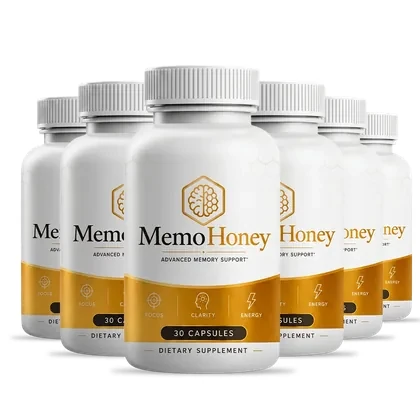
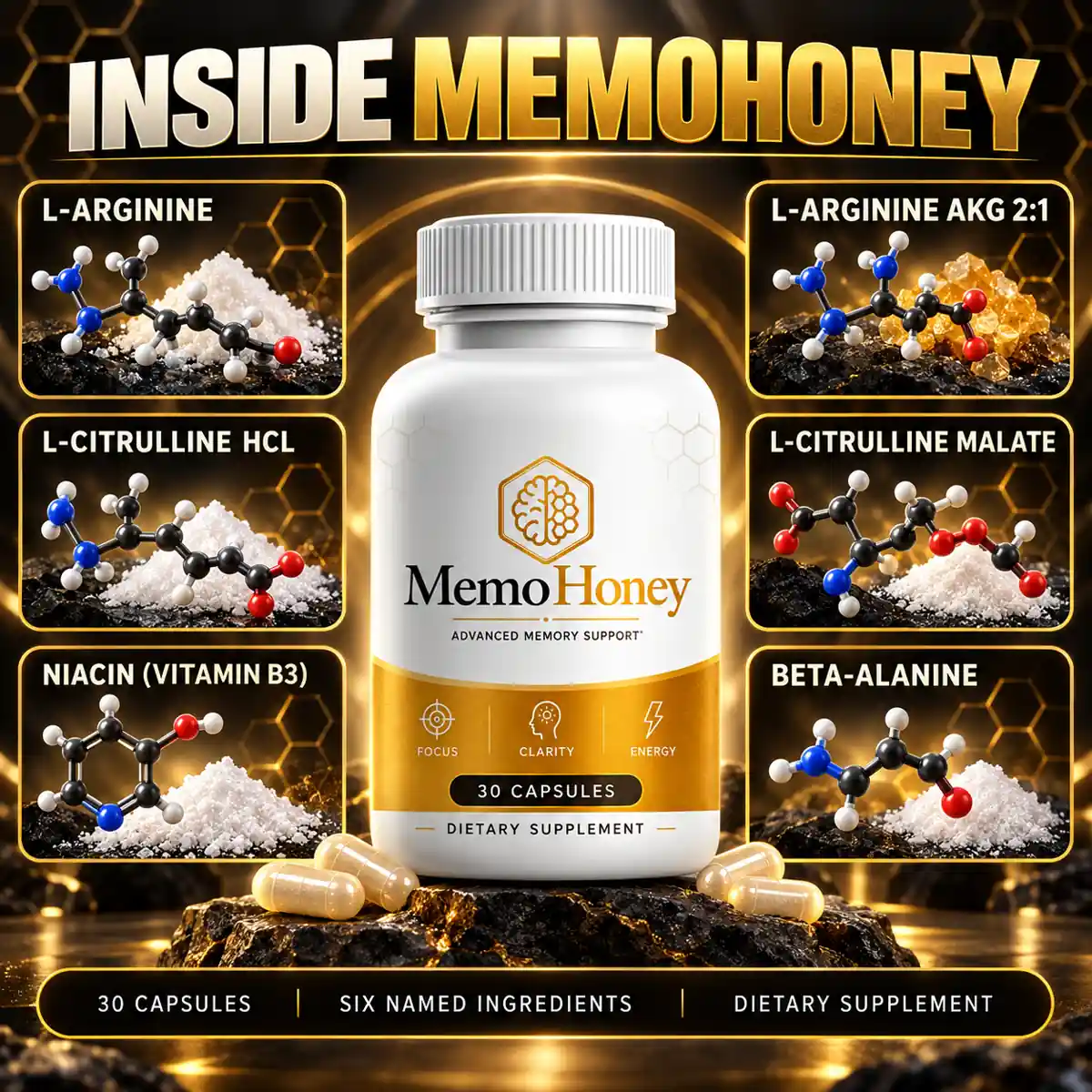
MemoHoney's bottle and supplied seller graphic name two arginine forms, two citrulline forms, niacin and beta-alanine. They do not give a milligram amount for any of the six. The useful response is not to guess a formula. It is to separate what the material establishes from the questions that an undisclosed amount leaves open.
What the supplied material establishes
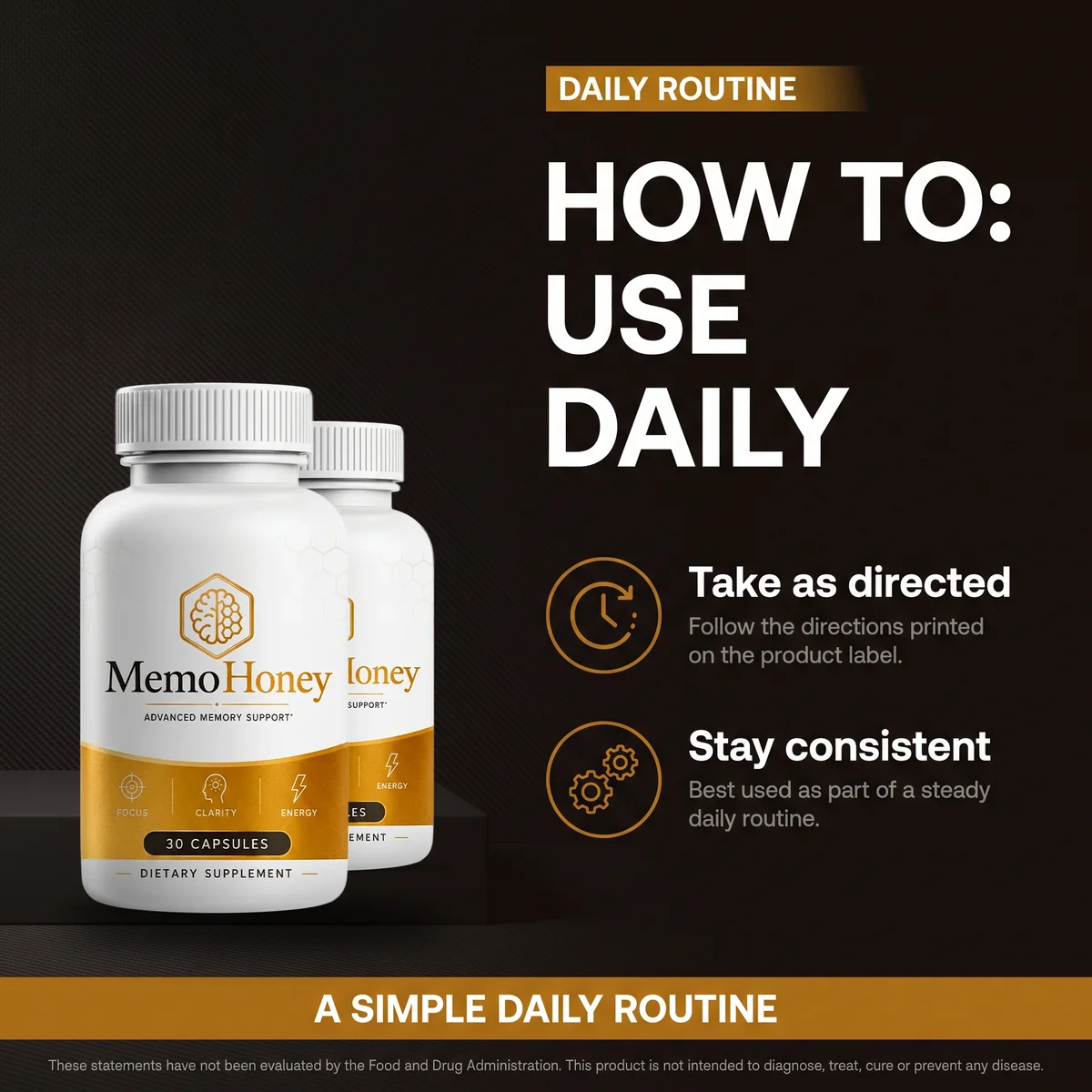
There is useful information before a number appears. MemoHoney is presented as Advanced Memory Support, a dietary supplement with 30 capsules. The bottle and seller graphic name L-arginine, L-arginine AKG 2:1, L-citrulline HCl, L-citrulline malate, niacin and beta-alanine. The supplied direction is one capsule daily with water, preferably in the morning before a meal. Those are product facts. They establish the ingredient identity and routine a buyer is considering.
The same supplied material does not show a Supplement Facts panel, serving-size block, daily value or individual milligram quantity. FDA consumer guidance describes the Supplement Facts label as a place to identify dietary ingredients and amounts (the FDA's own dietary supplement guidance). This article does not make a legal finding about any particular package. It makes the reader-facing observation that the MemoHoney material available to this site does not provide the numbers needed for a fair dose comparison.
Six names can look like a detailed formula. They are an ingredient list, not a formula disclosure. An ingredient may be present at many possible amounts. Without a quantity, a reader cannot responsibly say that an ingredient in this capsule matches a study dose, is equally divided with the other five, or accounts for a particular personal experience.
| The supplied material says | It does not say | A careful conclusion |
|---|---|---|
| 30 capsules; one capsule daily | Capsule fill weight or blend split | One bottle is a 30-day labelled routine |
| Six ingredient names | Milligrams per ingredient | Identity is known; formula strength is not |
| Focus, Clarity and Energy | A disease claim or clinical result | These are product-positioning words |
| Niacin is included | Niacin form or amount | Overlap and comparison questions remain |
| Beta-alanine is included | Whether it resembles an endurance protocol | No trial-dose comparison can be made |
This page uses the supplied bottle and seller material only. It does not fill missing values from another similarly named seller.
What an amount would answer
A number beside an ingredient lets a reader compare the product with a study while keeping the study's population and outcome in view. It lets them add the same nutrient across a multivitamin, pre-workout or second supplement. It lets a pharmacist answer a concrete question. A name alone does none of those jobs. The missing figure is not proof that the product is unsafe or ineffective. It is a limit on what can be said accurately about it.
For example, the NIH Office of Dietary Supplements describes an adult upper intake level for supplemental niacin, but no MemoHoney amount is shown to compare with it (the NIH Office of Dietary Supplements niacin fact sheet). The cited citrulline study used 3 grams twice daily; MemoHoney does not disclose an amount for either citrulline form (the 2008 pharmacokinetic study). The sports-nutrition position stand discusses beta-alanine in multi-gram daily protocols, but that cannot be silently attached to an unnamed amount in this product (the sports nutrition position stand). “Unknown” is the complete, buyer-safe answer until a current matching panel says otherwise.
Why ingredient forms still matter
Identity is not nothing. L-arginine and L-citrulline are related in the nitric-oxide pathway but they are not interchangeable by mouth. L-arginine AKG 2:1 identifies an arginine complex. Citrulline malate names malic acid beside citrulline. Beta-alanine is associated with carnosine in muscle. Niacin is a B vitamin with a recognised nutritional role. These distinctions allow a reader to describe the label accurately.
They do not establish what the capsule does. Evidence belongs to a specific amount, schedule, population and measured endpoint. An arginine blood-pressure meta-analysis is not evidence for an unnamed quantity inside a multi-ingredient memory supplement (the 2022 dose-response meta-analysis). A study can describe what its participants received. The label must supply the bridge—an amount and a matching routine—if a reviewer is to compare that study fairly with a product. The supplied MemoHoney material does not supply that bridge.
- Ingredient name: known from the supplied material.
- Individual amount: not printed in that material.
- Study dose: known only for the cited study.
- Likely effect for this capsule: not established by a name alone.
- Safety question: still worth discussing when medicines, pregnancy, nursing or a medical condition are involved.
One capsule and six unknown shares
The once-daily direction has a physical limit without revealing the formula. A capsule has finite volume, and its actual fill depends on shell size and powder density. Neither is supplied here. With six named actives sharing unknown space, there is no fair way to calculate the amount of any one ingredient. An even split would be an invention because formulas are not normally divided evenly.
That is why a reader should avoid two opposite shortcuts. One is to assume a capsule must be underdosed after dividing an imagined fill weight by six. The other is to assume that an undisclosed blend has a special low-dose combination. Neither conclusion follows from the available product material. The defensible statement is narrower: the listed ingredients have no disclosed amounts, so their quantities cannot be compared with a trial or added to another supplement total.
| Reader question | Answer from supplied material | Do not infer |
|---|---|---|
| How many actives are named? | Six | That they are equally dosed |
| How often is it used? | One capsule daily | That a higher dose is appropriate |
| How much niacin is present? | Not disclosed | That it is below a particular threshold |
| Does a citrulline paper set this product's dose? | No | That a study headline applies here |
| Can a new health symptom be assessed from this list? | No | That a product replaces professional advice |
Unknown is a complete answer when the available package information does not permit a safe calculation.
Keep niacin visible
Niacin deserves a separate pause because it is a vitamin and because the amount is not given. The NIH fact sheet is useful context, not a substitute formula. A person who already takes a B-complex, multivitamin or other supplement should list every product before deciding whether the ingredients suit their circumstances. The bottle's caution already directs people who are pregnant, nursing, taking medication or managing a medical condition to a healthcare professional.
Do not try to diagnose flushing, liver symptoms or another reaction from a web page. A new or concerning symptom is a reason to pause and seek appropriate advice. Bring the actual bottle and the full list of medicines and supplements. That gives a pharmacist or clinician something concrete to review, while a search result about another brand or a generic ingredient page may not.
Read MemoHoney as a label, not a promise
The supplied materials identify six ingredients and a once-daily routine. They do not disclose individual amounts. Keep that distinction visible before deciding whether the product fits your situation.
Two bottles $158 · six bottles $294 · 60-day money-back guarantee
Order MemoHoney On The Official WebsiteOne capsule a day · 30 per bottle · lot MEM-26/ME-1612
Questions before ordering
A buyer can ask clear, non-accusatory questions. Request a current image of the full Supplement Facts panel if one exists. Check that the product name, capsule count, serving direction and ingredient forms match the bottle being considered. A current label image is more useful than a long sales page with no amounts. If no matching panel is available, decide with that limitation instead of solving it with marketplace text or a study headline.
- Ask for a current full Supplement Facts image, if available.
- Check the 30-capsule count and once-daily direction.
- List all other supplements and medicines before purchase.
- Do not use a study dose as a substitute for a missing MemoHoney amount.
- For a new or worsening memory concern, seek assessment rather than buying on a label promise.
Make a practical decision
A careful buyer can still make a clear decision. The supplied materials support these facts: MemoHoney is a 30-capsule, once-daily dietary supplement marketed for advanced memory support; it names six active ingredients; and it does not disclose their individual amounts. The next decision depends on the buyer's context, other products, seller information actually available for the matching bottle, and any professional advice needed for medicines or health conditions.
NCCIH recommends healthy scepticism toward broad cognitive-product claims (NCCIH on memory and cognition products). That is not a reason to dismiss every buyer's experience. It is a reason to keep the language exact: a buyer may choose a personal routine, but a label does not self-treat a memory condition. The companion 30-day check-in offers a dated way to evaluate a routine without inventing a dose or a medical result.
- The supplied material identifies six ingredients and a once-daily routine.
- It does not provide individual amounts.
- A missing amount prevents a fair comparison with a study or overlapping supplements.
- Niacin makes that uncertainty worth keeping visible.
- Ask for a current matching label or decide with the uncertainty stated plainly.
This page describes the MemoHoney material supplied to this site. MemoHoney is not intended to diagnose, treat, cure or prevent disease.
References
- Questions and Answers on Dietary Supplements. U.S. Food and Drug Administration. https://www.fda.gov/food/information-consumers-using-dietary-supplements/questions-and-answers-dietary-supplements
- Niacin: Fact Sheet for Health Professionals. Office of Dietary Supplements, National Institutes of Health. https://ods.od.nih.gov/factsheets/Niacin-HealthProfessional/
- Shiraseb F, Asbaghi O, Bagheri R, et al. Effect of l-Arginine Supplementation on Blood Pressure in Adults: A Systematic Review and Dose-Response Meta-analysis of Randomized Clinical Trials. Adv Nutr. 2022;13(4):1226-1242. PMID 34967840. https://pubmed.ncbi.nlm.nih.gov/34967840/
- Schwedhelm E, Maas R, Freese R, et al. Pharmacokinetic and pharmacodynamic properties of oral L-citrulline and L-arginine: impact on nitric oxide metabolism. Br J Clin Pharmacol. 2008;65(1):51-9. PMID 17662090. https://pubmed.ncbi.nlm.nih.gov/17662090/
- Trexler ET, Smith-Ryan AE, Stout JR, et al. International society of sports nutrition position stand: Beta-Alanine. J Int Soc Sports Nutr. 2015;12:30. PMID 26175657. https://pubmed.ncbi.nlm.nih.gov/26175657/
- Dietary Supplements and Cognitive Function, Dementia, and Alzheimer's Disease. National Center for Complementary and Integrative Health. https://www.nccih.nih.gov/health/providers/digest/dietary-supplements-and-cognitive-function-dementia-and-alzheimers-disease