MemoHoney Official Website › Journal › Beta-Alanine In A Memory Capsule
Why Is Beta-Alanine In A Memory Capsule?
Beta-alanine is a muscle buffer. It is bought by rowers and cyclists to hold off the burn in efforts lasting one to four minutes, and its only well-documented side effect is a skin tingle. Finding it on a memory label is genuinely surprising, and the explanation turns out to involve soldiers, twelve grams a day and a set of endpoints that are not memory.
What beta-alanine actually does
Beta-alanine is an amino acid, but not one used to build protein. Its job is to be the rate-limiting ingredient in carnosine, a dipeptide stored inside muscle fibres. Carnosine soaks up hydrogen ions, which accumulate during hard effort and are a large part of why a muscle stops cooperating.
Supplement enough beta-alanine for long enough and muscle carnosine rises. The sports nutrition position stand for the ingredient sets the protocol plainly: four to six grams daily across a month or more, the effects showing up most clearly in open-ended efforts lasting one to four minutes (the sports nutrition position stand).
None of that has anything to do with the brain. Carnosine is stored in muscle, the effect is measured in muscle, and the people who buy it are buying a fourth lap rather than a clearer afternoon.
- A precursor for carnosine, which buffers acid inside muscle fibres.
- Loading takes four weeks or more, because muscle carnosine changes slowly.
- The performance benefit is clearest in efforts of one to four minutes.
- It is not a stimulant and it has no acute effect on anything except the skin.
- A 2025 review found the protocols studied in older adults averaged 2.4 to 3.2 grams a day (a 2025 review in older adults).
The tingle, and why it is useful information
Anyone who has taken a pre-workout knows the sensation: a prickling across the cheeks, scalp, neck and the backs of the hands, beginning twenty to forty minutes after the dose and gone within the hour. It is called paraesthesia, it is harmless, and it is by some distance the most reliably reported effect of this ingredient.
A 2019 systematic risk assessment pooled the beta-alanine literature specifically to look for harms. It found paraesthesia, and it found nothing else consistent (the 2019 risk assessment). The position stand says the same, and adds that splitting the dose or using a sustained-release form reduces it (the sports nutrition position stand).
For a buyer, the tingle is more interesting than it looks. It is dose-related, which means feeling it is evidence that the capsule contains enough beta-alanine to be felt. On a label that prints no amounts at all, that is one of the very few pieces of information available without a laboratory. Its absence proves rather less, because plenty of people never notice it at any dose.
It is not an allergic reaction, it does no damage and it does not build up over time; if anything it fades over the first fortnight. A rash, swelling of the face or lips, or any difficulty breathing is something entirely different and needs urgent attention rather than a website.
The cognition studies, read properly
So why does beta-alanine appear on memory labels at all? Because there is a small literature putting it in front of cognitive tests, and it is worth reading precisely rather than as a headline.
The studies were run on soldiers and recreationally active young men under simulated military operational stress. One gave twelve grams a day for fourteen days before a twenty-four hour simulated operation and measured cognition alongside monocyte recruitment (the 24-hour operation trial). Another used the same twelve grams a day and measured cognitive function, mood and circulating brain-derived neurotrophic factor before the same kind of stressor (the 2021 cognition and mood trial). A 2023 review of that body of work describes its findings in terms of performance, cognitive function and resiliency in soldiers (a 2023 review of the soldier studies).
| What the studies did | What a memory label implies |
|---|---|
| Gave 12 g a day for 14 days | An undisclosed fraction of a shared capsule, daily |
| Recruited soldiers and active young men | Adults in their forties to sixties at a desk |
| Tested under acute operational stress and sleep loss | Ordinary life, with ordinary sleep |
| Measured resilience, mood, reaction and BDNF | Memory, focus and mental clarity |
| Reported mixed and modest findings | A benefit stated without qualification |
Left column from the cited trials; right column is what the presence of this ingredient on a memory label invites a reader to assume.
Four differences, any one of which would be enough to make the extrapolation shaky. Together they mean the cognition literature on beta-alanine is about a different dose, a different population, a different stressor and a different set of endpoints from the one a memory capsule is sold for.
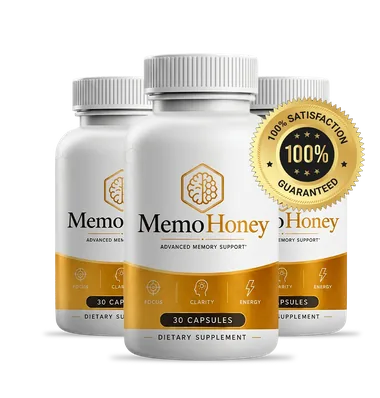
Beta-alanine is one of six names on the MemoHoney label
The ingredients page gives all six the same treatment: what it is, what it was given at, and what the studies actually measured.
Two bottles $158 · six bottles $294 · 60-day money-back guarantee
Order MemoHoney On The Official WebsiteOne capsule a day · 30 per bottle · lot MEM-26/ME-1612
The dose problem, again
Every article on this journal comes back to the same place, and this one arrives faster than most. The protocol is four to six grams a day. The cognition work used twelve. A single capsule holds well under one gram in total, shared between six ingredients.
That is a gap of at least five-fold against the lowest figure in the literature, and roughly fifteen-fold against the studies that put this ingredient in front of a cognitive test. No split of an undisclosed capsule closes it.
There is one qualification worth making, and it cuts both ways. Because paraesthesia is dose-related, a product whose users report a tingle contains more beta-alanine than one whose users do not. That tells you something about the relative amount. It does not tell you it has reached four grams, because the tingle threshold sits far below the loading dose.
There is an uncomfortable commercial observation to add here. Beta-alanine is one of the few ingredients where a manufacturer has an active reason to keep the amount down rather than up. Paraesthesia is the single commonest complaint about pre-workout products, and a company selling a once-daily capsule to adults in their fifties has no interest in producing a sensation that a good share of its buyers will read as an adverse reaction. That pressure points in precisely the opposite direction from the research, on an ingredient that only does anything at high doses.
The best case anybody can make for it
A fair article gives the other side properly, so here is the strongest version of the argument for beta-alanine on a memory label.
Carnosine is not only a muscle buffer. It is present in brain tissue, it has antioxidant and metal-chelating properties in laboratory conditions, and there is genuine scientific interest in what it does there. A formulator who has read that literature could reasonably say the ingredient is not as out of place as it first appears.
The second part of the case is the soldier work itself. Those studies exist, they were randomised, and the review of them treats cognitive function as a legitimate outcome (a 2023 review of the soldier studies). A formulator pointing at them is pointing at something real.
What neither argument supports is a capsule. The brain-tissue work is preclinical and says nothing about oral dosing in humans. The soldier work used twelve grams a day. Both arguments are arguments for beta-alanine at a scoop-sized dose in a specific context, which is not what is on offer here.
- Beta-alanine is a muscle ingredient with a well-documented protocol and one harmless side effect.
- Its cognition literature is about soldiers under stress at twelve grams a day.
- If you feel the tingle from a memory capsule, that is this ingredient, and it is nothing to worry about.
The verdict this desk reaches
Beta-alanine is the row this desk would remove from this formula first. It is the ingredient whose evidence base sits furthest from the use case, it is the one most likely to produce an unexpected sensation in a first-time buyer, and the capsule format gives it no realistic chance of reaching its own protocol.
Saying that on a website that sells the product is the point. A retailer who only ever agrees with the label is not telling a reader anything they could not get from the label, and the label claims page lists the other sentences this desk declines to repeat for the same reason.
If you are buying this capsule, buy it for the routine, the niacin and the sixty-day window rather than for this ingredient. And if the tingle arrives on day one, now you know what it is.
MemoHoney is a dietary supplement for healthy adults aged 18 and over, with no FDA approval, and it is not intended to diagnose, treat, cure or prevent any disease. Paraesthesia from beta-alanine is harmless, but a rash, swelling or breathlessness is not paraesthesia and needs urgent attention.
References
- Trexler et al, J Int Soc Sports Nutr 2015, vol. 12:30: International society of sports nutrition position stand: Beta-Alanine (PMID 26175657) https://pubmed.ncbi.nlm.nih.gov/26175657/
- Dolan et al, Adv Nutr 2019, vol. 10(3):452-463: A Systematic Risk Assessment and Meta-Analysis on the Use of Oral Beta-Alanine Supplementation (PMID 30980076) https://pubmed.ncbi.nlm.nih.gov/30980076/
- Varanoske et al, J Diet Suppl 2021, vol. 18(2):147-168: Effects of High-Dose, Short-Duration Beta-Alanine Supplementation on Cognitive Function, Mood, and Circulating Brain-Derived Neurotropic Factor (BDNF) in Recreationally-Active Males Before Simulated Military Operational Stress (PMID 32138563) https://pubmed.ncbi.nlm.nih.gov/32138563/
- Wells et al, J Strength Cond Res 2020, vol. 34(11):3042-3054: Effect of Beta-Alanine Supplementation on Monocyte Recruitment and Cognition During a 24-Hour Simulated Military Operation (PMID 33105353) https://pubmed.ncbi.nlm.nih.gov/33105353/
- Ostfeld et al, Nutrients 2023, vol. 15(4):1039: The Effect of Beta-Alanine Supplementation on Performance, Cognitive Function and Resiliency in Soldiers (PMID 36839397) https://pubmed.ncbi.nlm.nih.gov/36839397/
- de Camargo et al, J Aging Phys Act 2025, vol. 33(4):399-407: Beta-Alanine for Improving Exercise Capacity, Muscle Strength, and Functional Performance of Older Adults: A Systematic Review (PMID 39724872) https://pubmed.ncbi.nlm.nih.gov/39724872/